
Hair Restoration, Simplified.
Hair loss has more than one cause, which means it has more than one correct treatment. At OSVI, we start with a diagnosis, not a procedure, matching you to the intervention (or combination) that fits your pattern of loss, your stage, and your goals.
Licensed dermatology providers
Surgical and Non-Surgical Treatment Options
Licensed dermatology providers Surgical and Non-Surgical Treatment Options
Our 3 Treatment Pathways
At OSVI Dermatology, we offer three distinct approaches to hair restoration: non-surgical treatments that support natural growth, surgical restoration for more permanent results, and medical management designed to address the underlying causes of hair loss. Our experts evaluate your hair, scalp health, medical history, and goals to create a personalized treatment plan that supports fuller, healthier-looking hair.

supports natural growth
Non-Surgical

BEST FOR PERMANENT RESULTS
Surgical

ADDRESSes THE CAUSE
Medical Management
★★★★★ TRUSTED BY OVER 300 REAL PATIENT REVIEWS!
Non-Surgical Hair Restoration
PRP/PRF
-
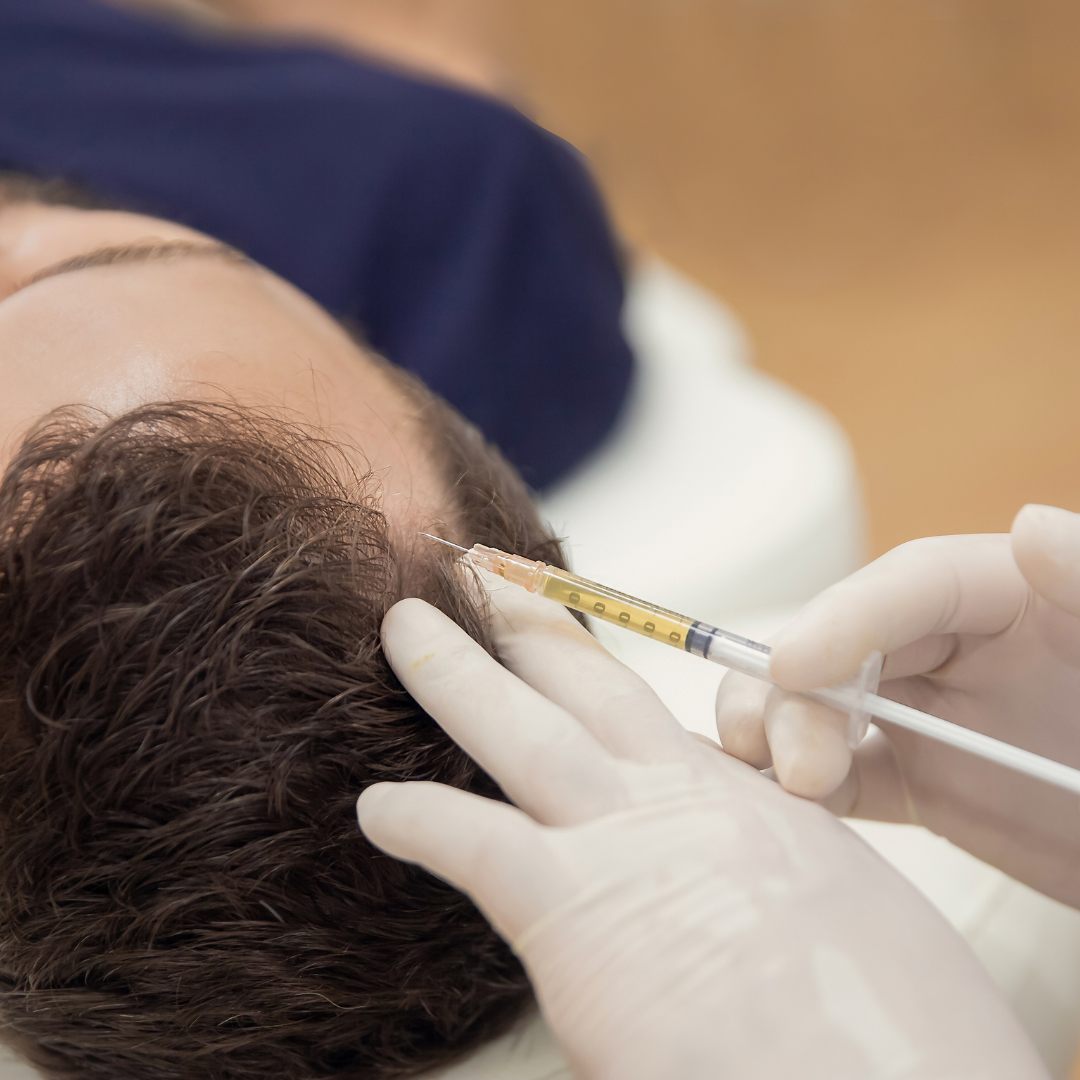
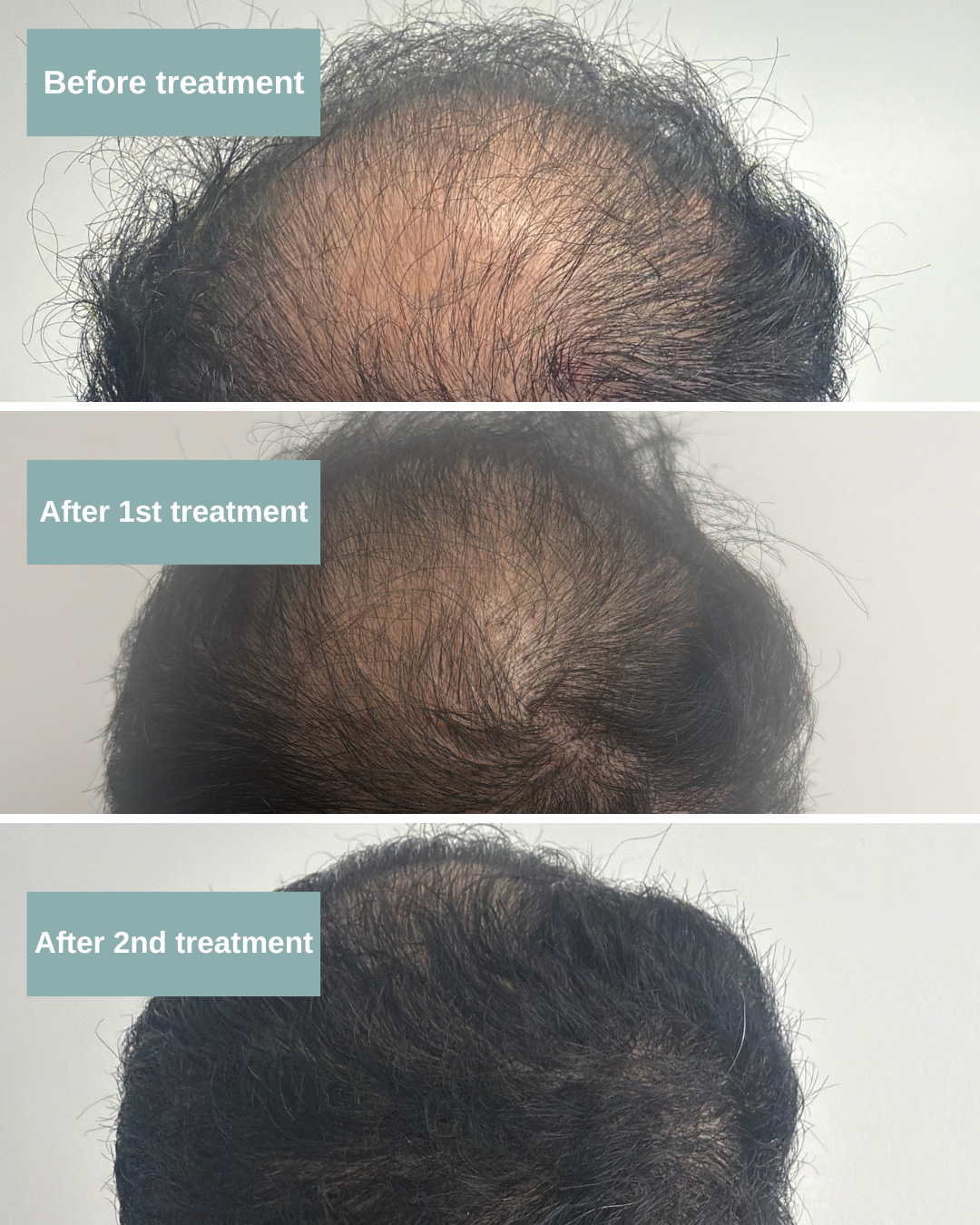
Platelet-rich plasma (PRP) and platelet-rich fibrin (PRF) use growth factors concentrated from your own blood, this means NO synthetic additives, to stimulate follicles that are miniaturizing but not yet dormant.
-
A small blood draw is spun down to isolate platelets, which are rich in growth factors (PDGF, VEGF, TGF-β) that promote angiogenesis around the follicle and can extend the anagen (growth) phase of the hair cycle. PRF differs from PRP in that it's processed without anticoagulant, producing a fibrin matrix that releases growth factors more gradually.
-
Early-to-moderate androgenetic alopecia (Norwood II–IV in men, Ludwig I–II in women), patients wanting to slow progression, or patients using PRP as an adjunct alongside medical management or post-transplant to support graft take.
-
A series of sessions (typically monthly for 3, then maintenance), minimal downtime, injected directly into the scalp at the level of hair loss.
PRP/PRF works on follicles that are still alive. It will not regrow hair in areas of complete follicular scarring or long-standing total miniaturization, which is when we then go for the surgical problem, not an injectable one.
ALMA TED
-
TED Hair Growth Treatments at OSVI Dermatology offer an advanced, needle free, medical-grade approach to hair restoration—designed to improve hair density, scalp health, and overall hair quality without needles, injections, or downtime.
-
The device uses low-frequency ultrasound to generate acoustic cavitation, microscopic bubbles beneath the stratum corneum that briefly disrupt the skin's lipid barrier and open reversible microchannels, without needles, incisions, or bleeding. A synchronized pulse of air pressure then drives a proprietary growth-factor and peptide serum through those channels to follicles a few millimeters below the surface.
-
Patients who want growth-factor delivery but prefer to avoid injections, patients using it as an adjunct to PRP/PRF or medical therapy, and patients with needle aversion who still want an in-office regenerative option.
★★★★★ TRUSTED BY OVER 300 REAL PATIENT REVIEWS!
Surgical Hair Restoration
FUE HAIR TRANSPLANTATION
-
For patients with stable donor supply and areas of permanent, non-responsive hair loss, follicular unit excision (FUE) offers a permanent restoration option.
-
Individual follicular units are extracted one at a time from a genetically resistant donor area (typically the occipital scalp) and transplanted into the areas of loss. Unlike strip harvesting (FUT), FUE leaves no linear scar recovery is faster and donor-site marks are essentially undetectable at short hair lengths.
-
Norwood III–VI in men, appropriate Ludwig-stage candidates in women with stable donor density, patients with sufficient donor supply relative to the area needing coverage, and patients who've optimized medical management first so the transplanted grafts aren't competing against ongoing untreated shedding.
-
What to expect: Performed under local anesthesia, single-session procedure (timing depends on graft count), with results becoming visible starting around month 4–6 and maturing over 12–18 months. Surgery redistributes hair you have; it doesn't create new follicles. Candidacy depends on donor density; not every patient with hair loss is a surgical candidate, which is why this sits after, not instead of, a diagnostic consultation.
Medical Management
CONSULTATION TO MAXIMIZE GROWTH
-
Before any procedure, we build a medical foundation because a graft placed into a scalp with untreated ongoing miniaturization, or a PRP series layered onto unaddressed hormonal drivers, is working against itself.
Medical management is the foundation that determines whether either of the other two options succeeds long-term. It's not a lesser alternative; it's frequently the first and most important step.
-
Diagnostic workup to confirm androgenetic alopecia versus other causes (telogen effluvium, thyroid dysfunction, iron deficiency, scarring alopecias) treating the wrong diagnosis is the most common reason patients feel "nothing is working"
Topical and oral therapy tailored to gender, stage, and goals
Bloodwork to rule out reversible contributors
A staged plan for how medical therapy pairs with PRP/PRF or precedes surgical planning
HOW IT WORKS
-

1. Schedule Your Consultation
Meet with our hair restoration expert to determine underlying causes and your personal hair goals.
-
2. Build Your Treatment Plan
We'll discuss your medical history, any previous treatments, and build a treatment plan that personalized to you.
-
3. Procedure
Continue treatment with regular follow-ups, progress monitoring, prescription management, and dose adjustments.
-
4. Continue Growth
Continue treatment with regular follow-ups, progress monitoring, and medical management.
Frequently Asked Questions
-
Yes. Accutane was the original brand name for isotretinoin. While the original Accutane brand has been discontinued, several FDA-approved generic and branded versions are available today, all containing the same active ingredient.
-
Yes. Most patients require routine laboratory monitoring before and during treatment to ensure isotretinoin remains safe and effective. Your dermatologist will explain exactly what testing is appropriate for you.
-
iPLEDGE is a federally required safety program for anyone prescribed isotretinoin. It helps prevent pregnancy during treatment because isotretinoin can cause severe birth defects. Our team guides you through every requirement so the process is as simple as possible.
-
No. Your $59/month membership covers your dermatology care and treatment management. Medication and laboratory costs are billed separately and may be covered by insurance.
★★★★★ TRUSTED BY OVER 300 REAL PATIENT REVIEWS
Expert Hair Restoration
Transform your hair with dermatologist-guided treatment. From your initial consultation to your final appointment, our team manages every step of your journey.